
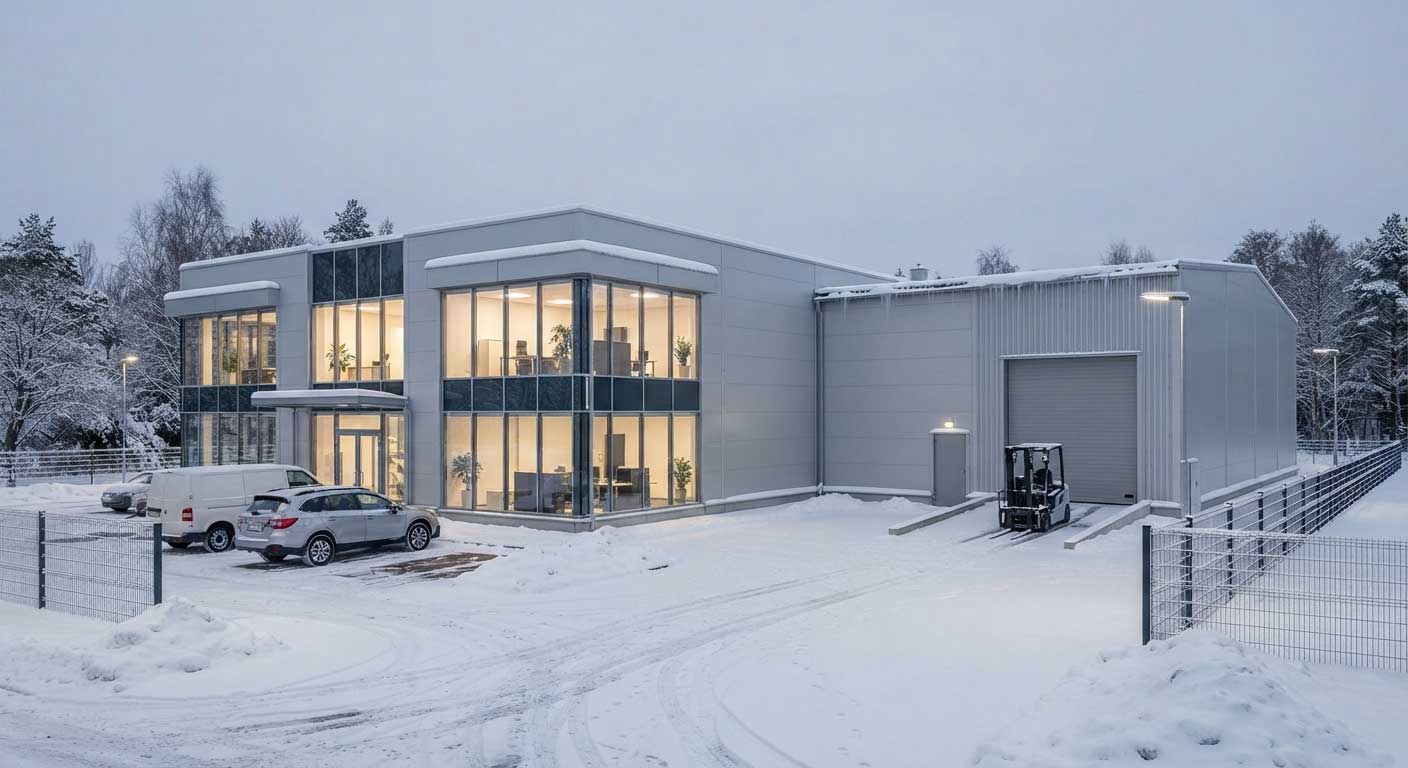
Latvian winters are unpredictable—rapid temperature fluctuations, high humidity, black ice, and heavy snowfall put significant strain on any commercial property. Timely and systematic preparation of a building for the cold period is not merely a preventive measure; it is a direct way to optimize operational costs and ensure the health and comfort of employees.
Transitioning to winter mode should be approached from three key perspectives: technical efficiency, financial justification and employee well-being.
A Strategic Guide to Efficiency, Cost Savings, and Employee Well-Being
1. Technical and Energy Efficiency Preparation
To prevent heat loss and costly emergency call-outs, building engineering systems must be inspected before the first frost:
- Heating System & Substation Maintenance: Preventive servicing of the heating unit, system flushing, and pressure testing ensure smooth heat transfer fluid circulation. Timely bleeding of radiators and calibrated thermostats prevent rooms from overheating or cooling down excessively.
- Ventilation & Heat Recovery Adjustment: Ventilation must run at optimal parameters during winter. Replacing filters and inspecting heat recovery units allow heat retention within the premises while delivering fresh outdoor air.
- Building Envelope & Roof Inspections: Checking window and door seals, as well as clearing roofs and rain gutters of leaves, prevents ice dams from forming and avoids water leakage.
Financial Justification: Why Prevention Pays Off
Timely winterization directly yields measurable financial returns:
- 10–20% Reduction in Heating Energy Consumption: A properly tuned heat unit automation and sealed air leaks significantly lower heating bills.
- Mitigation of Emergency Risks & Unplanned Repair Costs: Frozen pipes or snow-load roof damage cause operational downtime—resolving which often costs far more than a full year of preventive maintenance.
- Infrastructure Longevity: Prompt grounds cleaning and the right choice of de-icing materials protect entrance zones and indoor flooring from damage caused by salt and moisture.
Important: Planned preventive maintenance in autumn costs up to 3–5 times less than urgent emergency repairs in the middle of winter.
3. Employee Well-Being & Workplace Safety
A building's technical condition in winter directly impacts employee health, mood, and overall productivity:
- Optimal Indoor Microclimate & Air Quality: Premises that are too cold—or over-heated and dry—encourage respiratory illness and fatigue. Maintaining a stable temperature (around 20–22°C) and balanced indoor humidity reduces employee sick leave.
- Safe Access & Injury Prevention: Timely clearing of snow and ice from yards, walkways, and staircases (using eco-friendly anti-slip materials) ensures safety for both staff and visitors.
- Entrance Zone Cleanliness & Moisture Control: Installing effective 3-stage dirt and moisture-trapping mats at entrances during winter prevents slippery floor conditions inside the office.
Summary & Recommended Action Plan
To prepare your commercial facility for the winter season stress-free and without unnecessary expenses, we recommend following a 3-step plan:
- Conduct a comprehensive technical audit (heating, ventilation, roofing, and facade)
- Contract groundskeeping and snow removal services prior to the start of the peak season.
- Partner with a single, reliable facility management providercapable of handling both engineering systems servicing and daily property/grounds upkeep.
SIA Relianta delivers full-cycle facility management and technical services across Latvia. Ensure a safe, energy-efficient, and warm winter season for your business—contact our specialists today!